
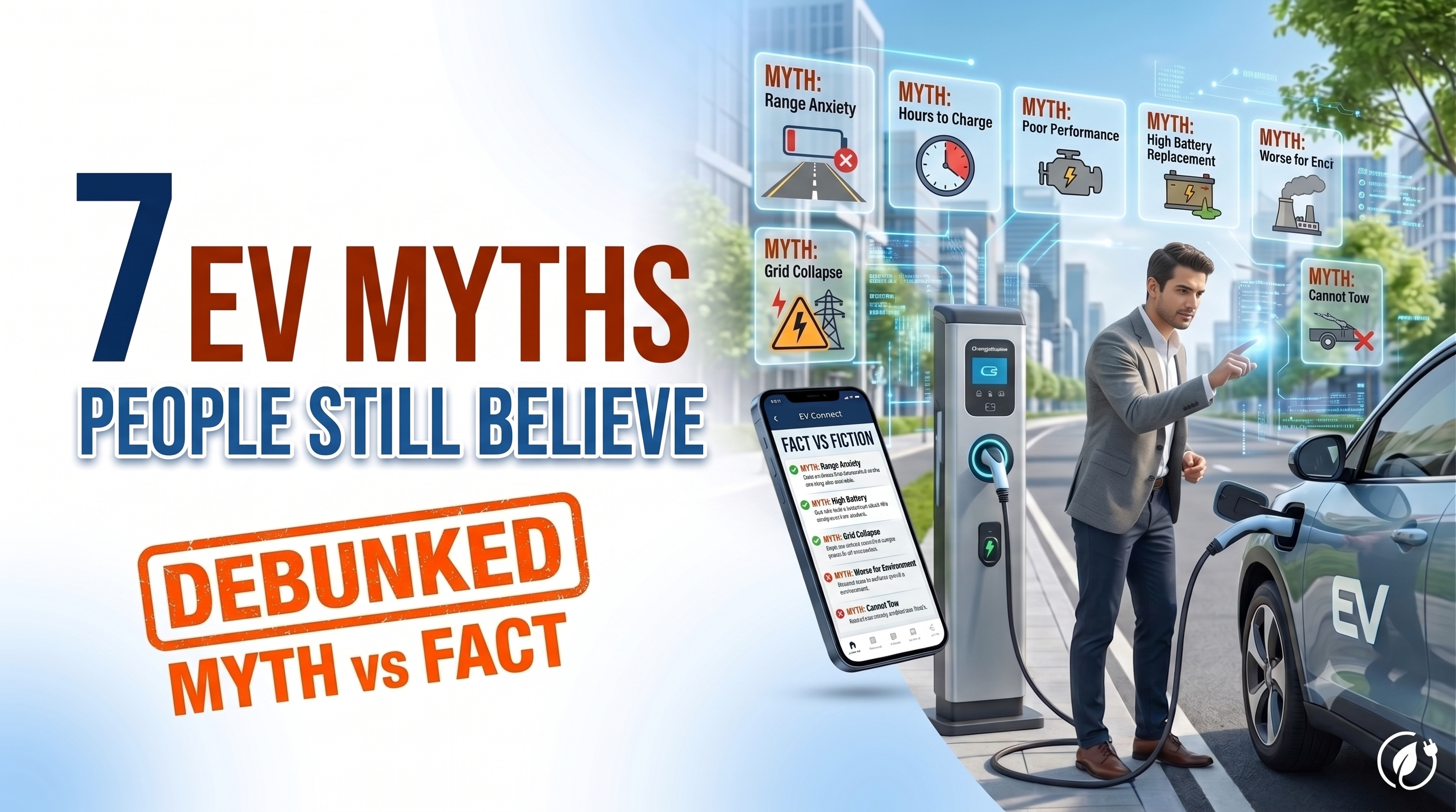
Is Your EV Really at Risk in the Rain? 7 EV Myths People Still Believe
Every year, right before monsoon season, the same set of ev myths start circulating again — WhatsApp forwards, YouTube comment sections, that one person who's fully convinced electric cars will electrocute you the moment it starts raining. Most of these myths have been around since the first EVs hit Indian roads, and most of them are simply wrong. Here's what's actually true.
Myth 1: Waterlogged Roads Will Damage Your EV
This is probably the most widespread ev myth in India, and it's easy to understand why — electricity and water don't mix, right?
Here's the reality. Every modern EV battery comes with an IP rating — usually IP65 or IP67. IP67 means the battery can sit submerged in a metre of water for 30 minutes without any leakage. On top of that, the battery has multiple automatic cutoffs that activate the moment water ingress is detected. Driving through a flooded road isn't ideal for any vehicle — but your EV's electrical system is far better sealed than most people assume.
Myth 2: Charging an EV in the Rain Is Dangerous
One of the most stubborn electric car myths vs facts debates going. People picture electricity, wet hands, a charging cable, and assume the worst.
EV charging stations are built to be weatherproof and shockproof. Connectors are sealed, equipment is tested specifically for wet weather use, and safety systems built into both the charger and the vehicle cut power the instant something isn't right. Charging your EV in the rain is as safe as using any other outdoor electrical equipment — the engineering accounts for it completely.
Myth 3: Using AC, Wipers and Lights Kills the Range
A surprisingly common ev myth — that turning on wipers, defogger, or headlights during heavy rain will drain the battery fast.
EV manufacturers account for these electrical loads when designing the battery pack. Wipers, lights, and defoggers draw a fraction of what the motor uses. Running all of them together has a minor effect on range — not a dramatic one. You're not going to lose 40?ttery because you turned your headlights on in the rain.
Myth 4: EVs Can't Handle Flooded Roads
This is one of those electric cars myths vs facts situations where the reality actually makes EVs look better, not worse. Most electric vehicles have higher ground clearance than comparable petrol cars, and their instant torque delivery means they can push through standing water more effectively than engines that need to build revs first.
That said — no vehicle should be driven through extremely deep flooding. The advice for EVs is the same as for any car: use judgment, don't push through water you can't gauge the depth of.
Myth 5: Monsoon Humidity Quietly Degrades Battery Capacity
The worry here is that months of humid, wet weather will slowly eat into battery performance. This ev myth is rooted in a grain of truth — extreme temperature swings do affect long-term battery health — but regular monsoon humidity is a completely different thing.
EV batteries are enclosed in protective housings designed specifically to handle moisture and humidity. Occasional wet-weather exposure during a normal Indian monsoon does not meaningfully degrade battery capacity. If it did, EVs simply wouldn't function in any coastal or high-humidity market — and they clearly do.
Myth 6: EV Range Drops Dramatically in Monsoon Weather
This electric car myths vs facts confusion happens because people mix up two separate things — very cold temperatures do reduce EV range, and that's true. But Indian monsoon means rain and moderate temperatures, not freezing cold.
EV range is affected by extreme heat or extreme cold, not by rain itself. Manufacturers test across a wide range of weather conditions precisely so the vehicle performs predictably year-round. A rainy day in Indore or Mumbai isn't going to cut your range the way a harsh winter would.
Myth 7: EVs Are More Likely to Have Electrical Problems in Monsoon
The most general of all electric cars myths vs facts debates — that electrical systems and monsoon weather are a dangerous combination waiting to go wrong.
Modern EV electrical systems are sealed, insulated, and protected against moisture and humidity to standards most people don't realise. The engineering that goes into keeping high-voltage systems safe in wet conditions is extensive, and it's been a core design priority since the beginning. EVs aren't more vulnerable to electrical issues in the rain — if anything, their sealed architecture makes them better protected than the exposed wiring found on many older petrol vehicles.
The Bigger Picture
EV myths around monsoon are understandable — high-voltage systems and wet weather naturally make people cautious. But the engineering in modern EVs accounts for Indian weather conditions specifically. The real risk isn't electricity and rain together. It's making vehicle decisions based on forwards and rumours that were outdated before they were even written.
If monsoon concerns are keeping you on the fence about an EV, those specific concerns are genuinely not the reason to stay there.
Frequently Asked Questions
Are ev myths about water damage actually true?
No. Modern EVs carry IP67-rated battery protection, meaning they handle waterlogged roads and rain without electrical damage. The ev myths around water are based on outdated assumptions, not how current EV engineering works.
What are the most common electric car myths vs facts around monsoon charging?
The biggest myth is that charging in rain is dangerous. The reality is that all EV chargers are weatherproofed, shockproofed, and certified for outdoor use in wet conditions — charging in the rain is completely safe.
Do EV batteries actually degrade in monsoon weather?
No. Battery packs are sealed against moisture. Monsoon conditions in India — moderate temperatures and regular rain — do not meaningfully affect battery capacity or long-term health.
Is EV range seriously affected by rain?
Rain alone doesn't reduce range significantly. Extreme cold does — but Indian monsoon weather is moderate, not freezing. The electric cars myths vs facts reality here is that most people overestimate how much rain affects EV performance.
Are these electric car myths specific to India?
Most are universal ev myths that exist wherever EVs are still relatively new. In India they get amplified by monsoon season, which focuses attention on the water and electricity combination — a concern modern EV engineering has already addressed comprehensively.